
How Can Marble and Granite Enhance the Interior Beauty of Iraqi Buildings?
A Comprehensive Guide to Selecting Marble and Granite in Iraq:
Natural stones, especially marble and granite, are among the most popular materials in the construction industry. In interior design, using high-quality and appropriate stones not only adds stunning beauty to the space but also increases the property’s value. Iraq, given its climatic conditions and rich culture, is a unique market for decorative stones in both interior and exterior building designs.
In this article, we examine the impact of marble and granite on beautifying the interiors of buildings in Iraq. From the importance of choosing the right stones to the factors determining quality and price, we will review practical solutions and key tips for selecting the best stones.
Why is Choosing the Right Stone Important?
The Role of Stone in the Lifespan and Strength of the Building:
Choosing the right stone can significantly affect the durability and quality of building structures. Stones like granite and marble, in addition to their beautiful appearance, offer high resistance to pressure and environmental changes. Due to its high density, granite is considered an ideal option for areas exposed to harsh weather conditions. In contrast, marble, with its softer texture and greater elegance, is recommended for interior spaces such as flooring, walls, and stairs. Therefore, stone selection must be based on the type of use and project requirements to reduce maintenance and repair costs.
The Impact of Beauty and Creating a Sense of Luxury in Interior Design:
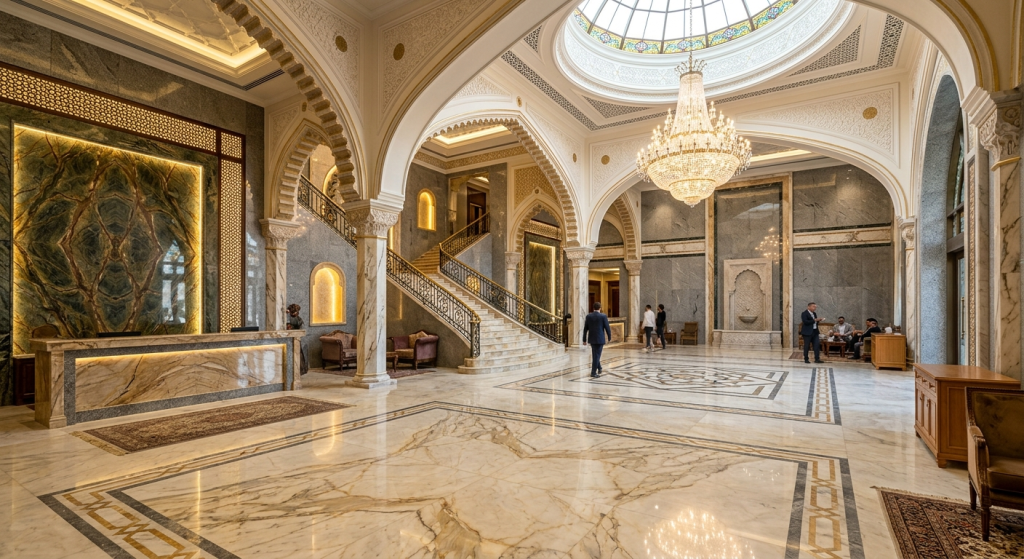
One of the main reasons for using marble and granite in Iraq is to create a luxurious and magnificent atmosphere. These stones, especially marble with its natural veins, provide a unique and special effect to the interior. Arabic culture places great importance on beauty, grandeur, and luxury, which is why the use of high-quality stones in the interior decoration of homes and public places is common in Iraq.
Increasing Property Value and Investment:
Using natural stones in the interior design of buildings, especially in Baghdad and other major Iraqi cities, is an effective way to increase property value. Spaces featuring natural stones like granite or marble are always in higher demand due to their luxury appearance and high resistance. Investing in natural stone not only contributes to the property’s beauty but also creates more financial value during sale or lease.
Common Types of Stone Used in Iraq:
Marble – A Manifestation of Grandeur:
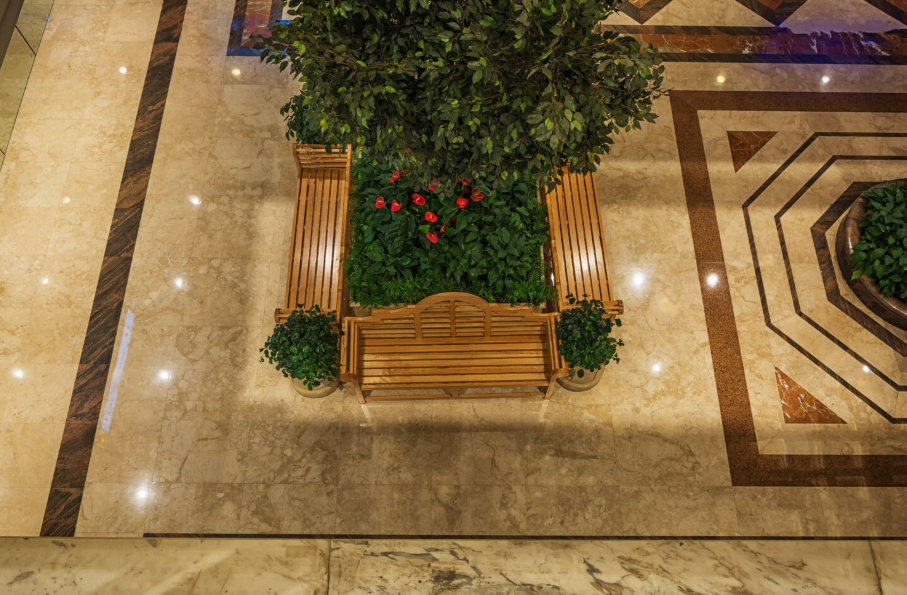
Marble is very popular in the interior design of Iraqi buildings due to its variety of colors, natural patterns, and the brilliant appearance it gives to the space. This stone is mostly used in walls, stairs, flooring, and even kitchen countertops. Prominent features of marble include:
Natural and glossy appearance.
Suitable for creating a sense of elegance and luxury.
Relative sensitivity to impact and scratches, though polishing and restoration are possible.
Granite – Strength and Durability:
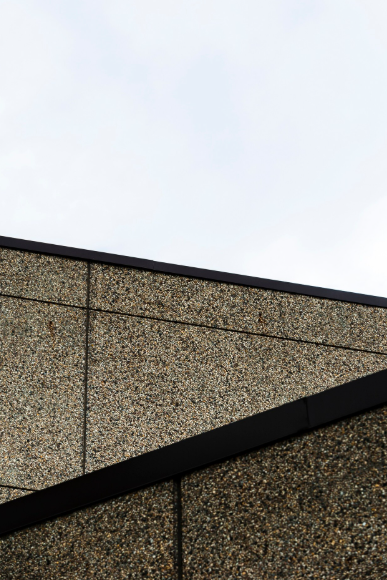
In contrast to marble, granite is better known for its strength and durability. Due to its high density and extraordinary hardness, this stone is suitable for surfaces under high pressure and weight, such as flooring and kitchens.
Features of Granite:
High resistance to heat and abrasion.
Variety in color and design.
Suitable for harsh weather conditions common in some regions of Iraq.
Travertine and Other Decorative Stones:
In addition to marble and granite, travertine also has many fans in Iraq. With its color variety and processing capabilities—such as polished, leathered, or honed finishes—this stone is very popular for both interior and exterior building designs.
Features of Travertine:
Color variety (from white to cream and brown).
Good resistance to temperature changes.
More cost-effective compared to marble and granite.
Comparison of Marble and Granite in Interior Design:
Marble: More suitable for interior spaces such as halls, bathrooms, restrooms, and fireplaces.
Granite: More applicable for flooring, kitchens, and high-traffic, durable environments. Considering the functionality of the space and the level of usage will help you make the best choice.
Section Three: Market Analysis and Smart Budgeting
Analyzing the Stone Market in Iraq: How to Budget Smartly?
After choosing the type of stone, the next question for any contractor or builder is the cost. The pricing of decorative stones in Iraq is not fixed and depends on several factors. Understanding these factors helps you budget with an open mind and receive the best value for your cost.
What Factors Determine the Final Price of Stone in Baghdad?
The price per square meter of stone is not just a number, but a reflection of its quality, rarity, and processing. The main factors include:
-
Quality and Sorting: Stones are graded based on purity, color uniformity, and the absence of unwanted cracks or veins. “Super” and “Premium” grades have higher prices than “Grade 1” or “Grade 2.”
-
Origin and Quarry: Some quarries have higher prices due to global reputation and the unique quality of their products.
-
Thickness and Dimensions: Larger and thicker slabs that allow for seamless cuts are more expensive.
-
Finish Type: A polished surface, which brings marble interior beauty to its peak, usually costs more than honed or leathered finishes.
Hidden Costs: Beyond the Purchase Price
Professional budgeting considers secondary costs as well. The purchase price of the stone is only part of the final cost. Be sure to include the following in your calculations:
Transportation and Customs: The cost of transferring stone from the origin to the project site in Iraq is a significant part of the total cost.
Professional Installation: Installing large slab stones or book-match and four-match designs requires a specialized team and specific equipment, which carries a higher cost.
Consumables: The cost of adhesives, resins, and sealers to protect the stone should not be ignored.
Section Four: Practical Selection Guide for Various Projects
How to Choose the Best Stone for Every Space?
A successful choice is one that harmonizes with the space’s functionality. Granite interior design for an industrial kitchen is done with different criteria than choosing marble for the lobby wall of a luxury hotel.
Functionality: The First and Most Important Criterion
High-Traffic Spaces (Hotel Lobbies, Shopping Malls, Hallways): In these locations, abrasion resistance is the priority. Granite is the best option due to its extreme hardness.
Wet Spaces (Bathrooms and Restrooms): Stones with low water absorption, such as granite or dense processed marbles, are smart choices.
Feature Walls and Focal Points (Lobbies, TV Walls): Beauty is the priority in these sections. Marble with unique veins and book-match designs can create a work of art.
Kitchen Countertops: Due to contact with acidic materials and heat, granite is the most resistant and practical option. Marble is also usable but requires more care and maintenance.
The Magic of Color and Light: How to Maximize the Stone’s Effect?
Stone selection should be done considering the natural and artificial light of the space.
Small and Low-Light Spaces: Light-colored marbles with a polished surface reflect light well, making the space appear larger and more open.
Large and Modern Spaces: Dark granites or marbles with dramatic veins can instill a sense of power and luxury.
Lighting: Correct and purposeful lighting can highlight the veins and crystals within the stone, showcasing its depth and texture.
To receive a free consultation and view our full product catalog, contact our experts today.


No comments yet.