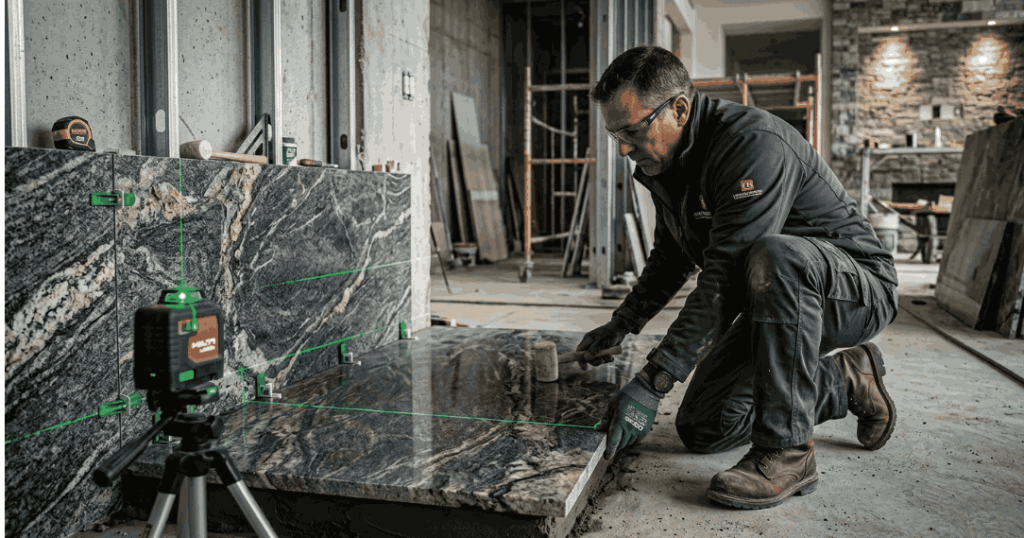
Choosing magnificent marble or tough granite is only half the journey to creating a durable and beautiful building in Iraq. The other half, the importance of which is often overlooked, is the proper and professional installation of the stone. A flawless installation can double the beauty of an ordinary stone, while an improper installation can turn even the most expensive stones into a costly and dangerous problem. The method of installing building stone is a science that guarantees the durability, safety, and ultimate brilliance of your project.
This article is a comprehensive and technical guide for contractors, engineers, and builders in the Iraqi construction market. We thoroughly examine the differences between marble and granite installation, dissect various installation methods from traditional mortar to modern mechanical systems, and point out common mistakes that can be disastrous in the Iraqi climate. By reading this guide, you will gain the necessary knowledge to oversee a flawless installation project.
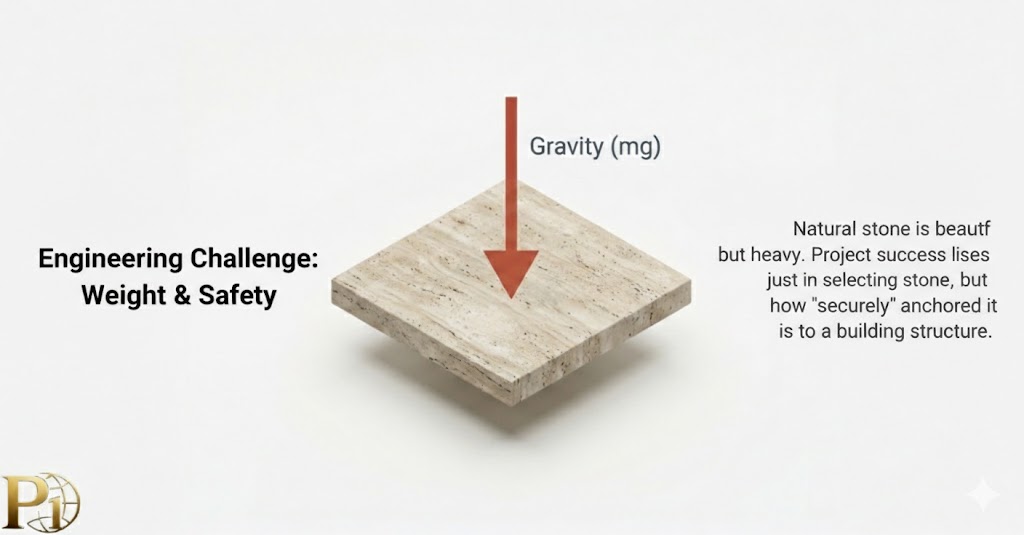
Why is proper stone installation more important than the stone itself?
Investing in premium stones without professional installation is like buying a luxury car without an engine.
Guaranteeing Structural Safety and Stability:
An improperly installed facade or flooring is a potential safety hazard. Standard installation ensures a solid connection to the structure, preventing stones from falling from heights or coming loose in high-traffic areas.
Preventing Massive Repair and Replacement Costs:
Most cracks, stains, or discoloration issues are rooted in improper installation. Problems such as moisture penetration due to poor grouting or failing to account for thermal expansion lead to exorbitant future costs. Proper installation is the most economical choice in the long run.
Revealing the Ultimate Beauty of the Stone:
A master installer truly “showcases” the stone. Precise leveling, uniform grouting, and the correct execution of book-match or quad-match patterns are what distinguish a masterpiece from an ordinary job. High-precision installation highlights the solidity of granite and transforms the veins of marble into a natural painting.
2: Preparing the ground and key differences
The strength of the final work depends entirely on the substrate. Ignoring this step renders all subsequent efforts useless.
Three Golden Principles of Substrate Preparation:
Leveling:The surface must be perfectly flat. Any unevenness creates hollow spots behind the stone, which increases pressure concentration and ultimately leads to cracking.
Structural Integrity: The wall or floor must be able to bear the heavy load of the stone, especially for large granite slabs on facades. Any structural weakness must be resolved before starting the work.
Cleaning:** Surfaces must be free of dust, grease, paint, or loose particles that act as bond breakers and prevent the full adhesion of the mortar or adhesive.
Special Requirements for Marble: Dealing with Moisture and Stains
The porous structure of marble makes it sensitive to moisture. The biggest threat is “efflorescence” (salt blossoming), which is caused by the penetration of water and chemicals from the mortar into the stone.
Surface Waterproofing: It is recommended to cover the underlying surface with a moisture barrier layer or primer.
White Cement Requirements: For light-colored marbles, always use white cement mortar. Black Portland cement contains metal oxides that penetrate the marble and cause dark or yellow stains, known as “stone cancer.”
Special Requirements for Granite: Weight and Adhesion Management
Granite is dense, heavy, and has nearly zero water absorption, requiring a specific approach.
Increased Structural Strength: Granite is significantly heavier than marble; the structure must be approved to handle this additional load.
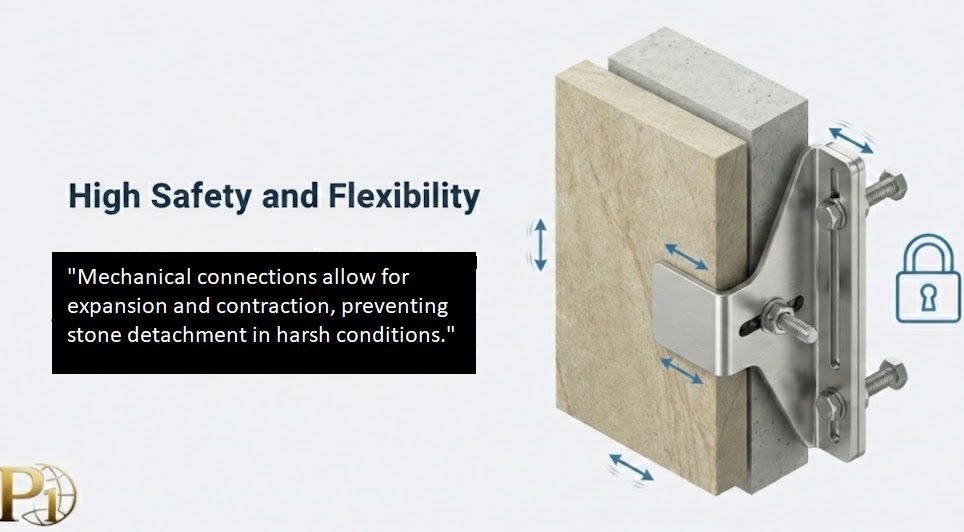
Mechanical Anchoring (Scooping): Since granite is non-porous, chemical bonding alone is not sufficient for facades. The back of the stone must be grooved and secured with metal clips (mechanical scoops) to establish a permanent physical connection to the wall and prevent it from falling.
Stone Installation Methods in Iraq: From Tradition to Modernity
-
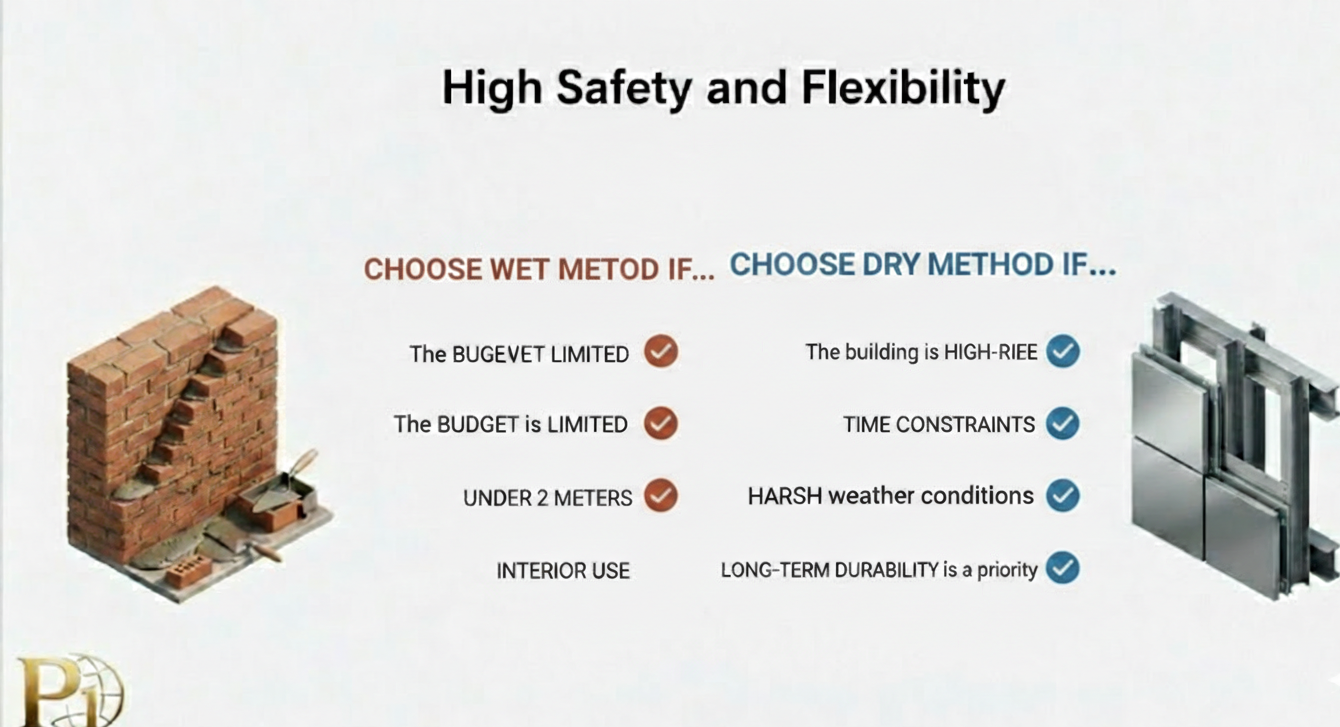
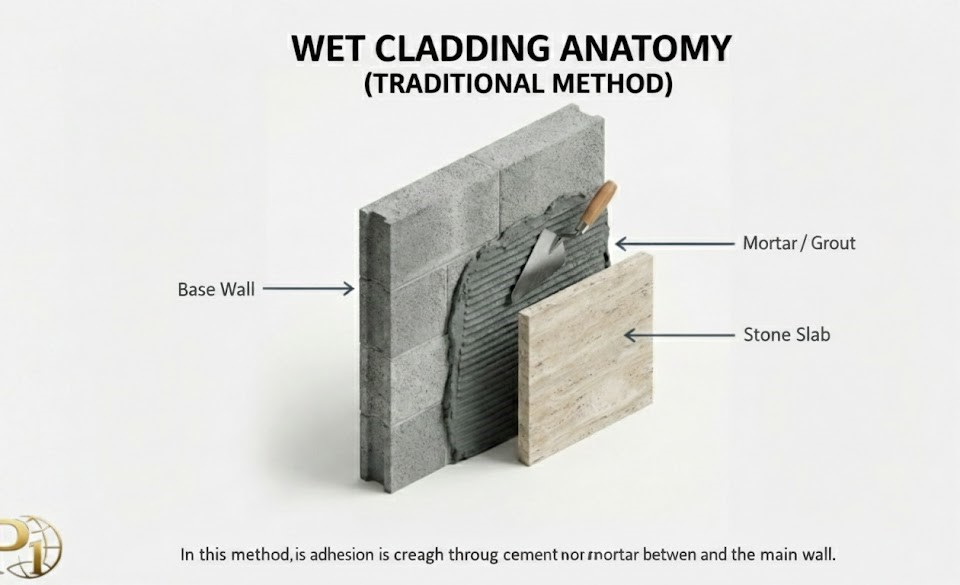
Wet Fix Method (Traditional Mortar)
The oldest and most common method in Iraq, which involves filling the space behind the stone with cement and sand grout/slurry.
- Advantages: Low cost and high adjustability for uneven underlying surfaces (substrates).
- Disadvantages: High dead load on the structure, risk of permanent staining (stone cancer), and highly dangerous for granite if used without mechanical anchors (scoops) due to its low adhesion.
Adhesive Method (Thin-set)
Using special cement-based or epoxy adhesives on a perfectly level surface. Ideal for interior walls and floors.
- Advantages: High speed, cleanliness, and excellent bond strength for low-absorption stones like granite. Adds negligible weight to the building.
- Disadvantages: Requires a flawless and perfectly level substrate, and has higher material costs compared to traditional mortar.
3. Dry Installation Method (Mechanical Installation): The Golden Standard
The most advanced and safest method for exterior facades. The stone is secured at a distance from the main wall using a metal substructure and mechanical anchors.
- Advantages: Maximum safety for high-rise buildings with zero risk of falling. The air gap acts as thermal and acoustic insulation—a major benefit for Iraq’s scorching climate. It allows for the easy replacement of damaged pieces and can be executed in any weather condition.
- Disadvantages: Due to the metal framing, it is the most expensive option and requires a highly specialized technical team.
Conclusion: Protect Your Investment
At P1 Stone, we believe buying stone is a decision you will live with for decades. Do not waste your project with the wrong installation choice.
For expert advice and to receive the latest price list and catalog,