
The Definitive Reference for Natural Building Stones (2026 Edition)
Introduction: Stone is an Asset, Not an Expense
Are you lost among a multitude of names like travertine, marble, granite, and crystal stone? It is understandable. Buying natural stone is one of the most complex stages of construction. A technical negligence – such as using marble for the exterior facade – can lead to stone detachment and millions in structural damages within a few years.
This A-to-Z reference guide examines natural stones through an engineering lens. Whether you are looking for the most luxurious stone for a hotel lobby or the most resistant stone for a high-traffic parking lot, you will find the answers to all technical, pricing, and execution questions here. Let’s settle the “natural stone case” once and for all.
Why is natural stone the superior choice?
Unlike artificial materials such as ceramics or composites that severely fade and age, natural stone is a “living” element that maintains its prestige over time. 3 key reasons why Iranian stones are unrivaled in the Middle East:
-
Natural thermal insulation: Due to its natural porosity (especially in travertines), stone acts as an insulating layer, preventing energy loss and keeping the indoor climate of the building balanced.
-
Durability and longevity: High-quality granites and travertines have centuries of useful life and are inherently resistant to ultraviolet rays.
-
Artistic value: No two pieces of stone are identical. Every stone slab is a unique painting created by nature over millennia.
1. Travertine: The King of Exteriors
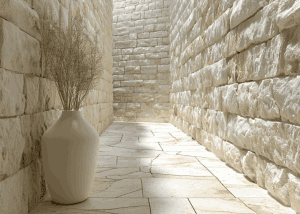
Travertine is the most popular stone for facades in the world. The secret to this lies in its natural pores (vacuoles). These pores act like mechanical “claws” and draw the cement mortar into themselves to create a seamless bond with the structure and ensure that the stone never falls.
Abbas Abad Travertine (Glossy White)
Iran’s whitest and most luxurious travertine, a symbol of wealth and premium architecture.
- Best applications: Classic and Roman facades, entrances of luxury villas, modern designs with contrast (along with silver travertine).
- Technical advantage: Mirror-like polish (high density), inherent color stability (without yellowing under UV rays), and excellent adhesion.
- Pro tip: It is usually processed cross-cut for a cleaner and whiter appearance.
B. Haji Abad Travertine (Cream/Beige)
Known for its high density and resistance to extreme temperature fluctuations.
- Best applications: Precise CNC carvings, columns, and high-volume commercial projects.
- Technical advantage: Low water absorption makes it ideal for freezing mountainous climates.
Dara Buhari Travertine (Light Cream/Wavy)
It gives “character” to the building with its natural and rhythmic waves.
- Best applications: Wide facades where horizontal veins create a sense of length.
D. Silver Travertine (Smoky/Silver)
A choice for architects who desire distinction and modernity.
- Best applications: Modern designs that are combined with thermowood or glass.
- Technical advantage: Unlike black marbles that fade, the pigments of silver travertine are stable against UV rays.
E. Chocolate and Tan/Yellowish-Brown Travertine
Warm tones and affordable pricing for large-scale projects.
- Strategic advantage: It perfectly camouflages dust (ideal for arid regions) and offers an “economical luxury” appearance.
2. Marble:
The Splendor of Interior Design Marble is the epitome of luxury in interiors. It offers the highest level of gloss (reflectivity)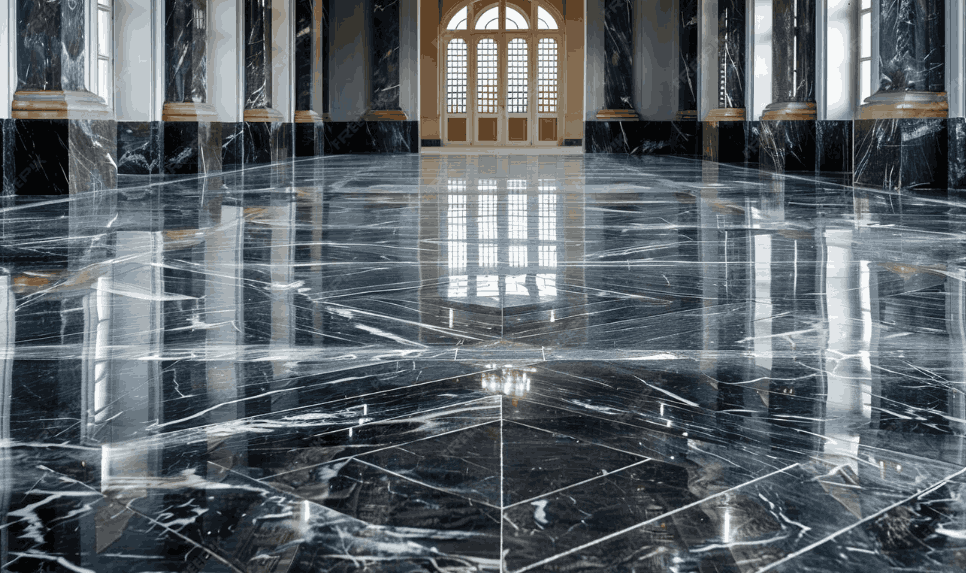
Warning: Never use marble for exterior facades; sunlight destroys its natural pigments.
A. Pietra Grey (Ancient Marble)
A grey stone with white veins and global fame. The main competitor to Italian stones.
Best applications: Minimalist designs, luxury bathrooms (paired with gold fixtures), and TV walls.
B. Royal Botticino (Dehbid Marble)
Cream-colored with a glass-like finish that makes spaces appear twice as large.
Technical edge: The densest Iranian marble with the highest reflection rate.
C. Golden Black Marble
Black background with natural gold veins. The pinnacle of luxury for hotel lobbies and elevator frames.
D. Persian Silk Marble
A light, cloudy grey that brings tranquility. It is the “safest” choice for modern apartments because it harmonizes with any furniture color.
3. Crystal/Porcelain (resistance similar to agate)
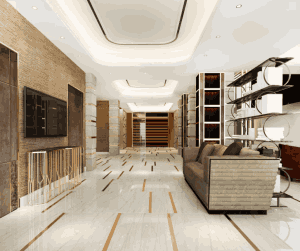
If you need a “white stone” that is 100%100\% waterproof and frost-resistant, Crystal stone is the only solution. Its water absorption is close to 00.
A. Azna Crystal
“Iranian Ariston”. Pure white background; an economical alternative to Greek marbles.
Best applications: Wet areas (bathrooms/pools) and all-white luxury kitchens.
B. Aligudarz Crystal
Features striking grey/black lines, suitable for Book-match or Four-match patterns.
Strategic advantage: Offers the beauty of Italian statues with the hardness of steel.
C. Neyriz Crystal
White with fine and faint lines. A “low-maintenance” white stone that hides minor stains and dust.
Granite: The ultimate in hardness
Granite is volcanic. It is scratch-resistant, acid-resistant, and unchanging. The only logical choice for parking lots, shopping malls, and industrial environments.
A. Black Natanz Granite
The definition of “tough.” Oil-resistant and capable of withstanding heavy vehicle traffic without losing its shine.
B. Nehbandan Granite (Cotton Flower)
A light and mild texture. The “golden balance” between low price and high durability for massive flooring projects.
C. Pearl Granite
The most economical natural stone available in the market. Ideal for industrial warehouses, sidewalks, and urban curbs.
5. Agate (Marble-Agate): The Magic of Light
The rarest and most expensive. Its unique feature is translucency. Using backlit onyx slabs creates a dreamy and royal atmosphere in VIP lounges.
Technical Standards and Quality Inspection
How to distinguish “super export grade” from “commercial grade”?
- Processing Quality: High-quality stones use epoxy resin with a fiberglass mesh backing. Cheap stones use polyester resin, which yellows over time.
- Calibration: All our slabs are calibrated (with consistent thickness) and squared at a 9090-degree angle for seamless installation.
- Sorting: We sort the stones based on precise color spectrums to achieve a uniform appearance.
Types of Surface Finishes
- Polished: Mirror-like. Suitable for interior flooring.
- Honed: Soft, matte, non-reflective. Very modern.
- Leathered/Brushed: Textured surface to create a natural and rustic feel.
- Flamed: Flamed surface (granite only) for outdoor anti-slip areas.
Frequently asked questions
What is the best stone for hot climates (Baghdad/Basra)?
Light travertines (Abbas Abad / Haji Abad) are the best due to their high reflection of ultraviolet rays and insulation properties.
Can I use granite on the facade? Granite is heavy and has no pores. If used, it must be installed using the “Dry Fix” (mechanical) method using anchors/scoops to prevent it from falling.
Conclusion: Do not ruin your project with the wrong choice.
Buying stone is a decision you will live with for decades. At P1 Stone, we are committed to true quality, precise sorting, and direct factory pricing.
[Contact our sales experts on WhatsApp today to receive the 2026 catalog and price list]


each time i used to read smaller content which as well clear their motive, and that is also happening with this post which I am reading here.
Also visit my blog :: Chinese investment opportunities